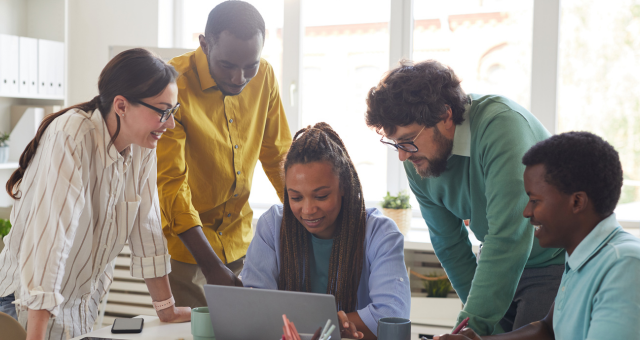
Student engagement plays an important role in academic success. When students actively participate in classroom activities, exchange ideas, and work together to solve problems, they often develop a deeper understanding of what they are learning. Traditional teaching methods that rely mainly on lectures and individual assignments can sometimes limit opportunities for interaction. Collaborative learning offers an effective approach by encouraging students to participate, communicate, and learn from one another.
Collaborative learning involves students working together toward shared academic goals. Through group discussions, team projects, peer reviews, and problem-solving activities, learners become active participants in the educational process.
The collaborative learning benefits extend beyond classroom participation. This approach can support critical thinking, communication skills, teamwork, confidence, and a stronger sense of belonging. This article explores how collaborative learning improves student engagement and how educators can use it effectively.
1. Encourages Active Classroom Participation
One of the most important benefits of collaborative learning is that it encourages students to become active participants rather than passive listeners.
In traditional classroom settings, students may spend much of their time listening to explanations and taking notes. Collaborative activities create opportunities to ask questions, share opinions, explain concepts, and contribute to group discussions.
For example, a teacher can divide students into small groups and ask them to discuss a topic before presenting their conclusions to the class. This gives learners an opportunity to think independently and then participate in a shared discussion.
Active participation can help students remain focused and take greater responsibility for their learning.
2. Improves Communication Skills
Effective communication is an essential academic and professional skill. Collaborative learning gives students regular opportunities to express their thoughts, explain ideas, listen carefully, and respond respectfully to different opinions.
During group activities, students learn how to communicate information clearly and adjust their explanations according to the needs of others.
These experiences can help learners develop:
- Verbal communication skills.
- Active listening abilities.
- Confidence in expressing opinions.
- Respectful discussion habits.
- Presentation and explanation skills.
- Constructive feedback techniques.
For example, students working on a science project may need to explain their research findings to teammates before preparing a final presentation.
These communication experiences can support academic development while preparing students for future workplace interactions.
3. Develops Critical Thinking and Problem-Solving Abilities
Collaborative learning encourages students to examine different perspectives and consider alternative solutions. Instead of relying on a single explanation, learners can compare ideas, question assumptions, and evaluate evidence together.
For instance, a group studying environmental issues might examine several possible solutions to reduce plastic waste. Each student can research a different approach before the group discusses its advantages and limitations.
This process encourages students to think more deeply about complex topics.
Collaborative problem-solving can help learners:
- Analyze information carefully.
- Identify important questions.
- Compare different viewpoints.
- Evaluate possible solutions.
- Support arguments with evidence.
- Make reasoned decisions.
When students explain their reasoning to others, they may also recognize gaps in their own understanding and improve their thinking.
4. Creates a Supportive Learning Environment
Students do not always feel comfortable asking questions or participating in large classroom discussions. Some may worry about giving incorrect answers or speaking in front of their classmates.
Small-group activities can create a more supportive environment where learners have opportunities to express themselves with less pressure.
Working with classmates can help students understand difficult concepts through explanations and examples presented in familiar language.
A supportive learning environment also encourages students to ask for help, share challenges, and recognize that making mistakes is part of learning.
Teachers should ensure that group activities remain respectful and inclusive so that every student feels comfortable contributing.
5. Strengthens Student Confidence and Motivation
Confidence can influence how students approach academic challenges. Learners who believe their contributions are valued may become more willing to participate and explore unfamiliar subjects.
Collaborative learning provides opportunities for students to contribute according to their individual strengths. One student may be skilled at research, another at writing, and another at presenting information.
When each contribution supports a shared outcome, students can recognize the value of their abilities.
Group achievements can also create a sense of accomplishment and encourage learners to remain motivated.
However, teachers should make sure that every student receives meaningful opportunities to participate rather than allowing a few confident individuals to control the activity.
6. Promotes Peer-to-Peer Learning
Students often understand concepts differently, and learning from classmates can provide additional explanations that complement teacher instruction.
Peer-to-peer learning occurs when students share knowledge, explain ideas, ask questions, and help one another understand academic material.
For example, a student who understands a mathematical method can explain the steps to a classmate who is struggling with the same problem.
Explaining a concept also helps the student providing assistance organize and strengthen their own understanding.
Peer learning is particularly useful when activities are carefully structured and teachers remain available to correct misunderstandings.
It should complement professional instruction rather than replace the teacher’s role.
7. Builds Teamwork and Social Skills
Collaborative learning teaches students how to work effectively with people who may have different opinions, abilities, and working styles.
Group assignments require learners to divide responsibilities, manage time, resolve disagreements, and complete shared tasks.
These experiences help students develop important social skills, including:
- Cooperation and mutual respect.
- Conflict resolution.
- Responsibility and accountability.
- Decision-making.
- Leadership.
- Adaptability.
For example, students preparing a group presentation must agree on a topic, assign research responsibilities, organize information, and coordinate their contributions.
Learning to cooperate in these situations can prepare students for future academic projects and professional environments.
8. Encourages a Sense of Belonging
A positive classroom environment can influence students’ willingness to participate and remain engaged in learning activities.
Collaborative projects help students build relationships with classmates and develop a sense of connection to their learning community.
When students work toward common goals, they have opportunities to recognize one another’s strengths and appreciate different perspectives.
This can be particularly helpful for learners who feel disconnected during individual classroom activities.
Teachers can encourage belonging by creating balanced groups, establishing respectful communication rules, and providing opportunities for every student to contribute.
An inclusive classroom culture helps students understand that their ideas and efforts matter.
9. Makes Learning More Interactive and Interesting
Repetitive teaching activities can sometimes make lessons feel less engaging. Collaborative learning introduces variety through discussions, games, research projects, presentations, and practical challenges.
For example, a history teacher might ask students to work in groups to examine different perspectives on a historical event. A science teacher could organize a team experiment where learners record observations and compare results.
These activities connect academic concepts with practical experiences.
Interactive learning can also help students maintain attention because they have clear responsibilities and opportunities to participate.
The most effective activities are those that connect directly to learning objectives rather than simply placing students into groups without a meaningful purpose.
10. Supports Different Learning Needs and Strengths
Every student has individual learning preferences, abilities, and areas requiring additional support. Collaborative learning can provide different ways for students to engage with academic material.
Some learners may contribute through speaking, while others may prefer research, writing, visual organization, or practical tasks.
Teachers can design group activities that allow students to use their strengths while developing new skills.
For example, a group assignment might include research, note-taking, data analysis, creative design, and presentation responsibilities.
This approach can create more opportunities for participation, but teachers should avoid permanently assigning students roles based on perceived ability. Students should have opportunities to explore different responsibilities.
Accessible instructions, appropriate learning materials, and additional support can help ensure that collaborative activities benefit a wider range of learners.
11. How Teachers Can Implement Collaborative Learning Effectively
Successful collaborative learning requires more than dividing a classroom into groups. Teachers need to establish clear objectives, organize responsibilities, and monitor how students work together.
The following strategies can help educators create meaningful group activities.
Set clear learning objectives: Explain what students should understand or accomplish by the end of the activity.
Create balanced groups: Consider students’ skills, experience, learning needs, and classroom dynamics when forming teams.
Assign meaningful roles: Give students responsibilities such as researcher, discussion leader, note-taker, or presenter. Rotate roles to provide different learning experiences.
Provide clear instructions: Explain the task, expected outcome, available resources, and time limits.
Encourage equal participation: Use structured discussions and individual responsibilities to prevent some students from doing all the work.
Monitor group progress: Observe discussions, answer questions, and provide guidance when necessary.
Evaluate individual and group learning: Assess both the final outcome and each student’s understanding and contribution.
Encourage reflection: Ask students to discuss what worked well, what challenges they experienced, and how they could improve future teamwork.
These practices help create structured learning experiences with clear academic value.
12. Common Challenges of Collaborative Learning
Although collaborative learning offers several advantages, it can also create challenges when activities are poorly organized.
Some common problems include:
Unequal participation: Certain students may complete most of the work while others contribute very little.
Personality differences: Disagreements or communication difficulties may affect group performance.
Time management problems: Group discussions can become unproductive without clear objectives and deadlines.
Conflicting ideas: Students may struggle to reach agreement when they have different opinions.
Assessment difficulties: Teachers may find it challenging to evaluate individual contributions fairly.
Educators can address these problems by setting expectations, assigning responsibilities, monitoring participation, and using a combination of group and individual assessments.
Clear guidelines help students understand that collaboration requires shared responsibility.
Frequently Asked Questions (FAQs)
1. What is collaborative learning in education?
Collaborative learning is an educational approach in which students work together to achieve shared learning objectives. Activities may include group discussions, team projects, peer teaching, research, and problem-solving exercises.
2. What are the main benefits of collaborative learning?
The main benefits include improved communication, critical thinking, teamwork, confidence, peer-to-peer learning, classroom participation, and stronger social connections.
3. How does collaborative learning improve student engagement?
It gives students opportunities to participate actively, exchange ideas, solve problems, and take responsibility for shared tasks. These experiences can make lessons more interactive and meaningful.
4. What are examples of collaborative learning activities?
Examples include group research projects, classroom debates, peer reviews, science experiments, problem-solving challenges, team presentations, and collaborative writing assignments.
5. Is collaborative learning suitable for all students?
Collaborative learning can support many students when activities are accessible, well-structured, and appropriate for their learning needs. Teachers should provide clear instructions and alternative ways to participate where necessary.
6. How can teachers evaluate collaborative learning?
Teachers can assess group projects, individual assignments, presentations, participation, peer feedback, and student reflections. Combining individual and group assessment provides a more balanced understanding of learning outcomes.
Conclusion
Collaborative learning is a valuable educational approach that can improve student engagement by making classroom experiences more interactive, supportive, and meaningful. Through teamwork, discussion, peer teaching, and shared problem-solving, students gain opportunities to develop academic knowledge alongside important communication and social skills.
However, successful collaboration requires thoughtful planning, clear learning objectives, balanced participation, and effective teacher guidance.
When educators create inclusive activities and give every learner a meaningful role, collaborative learning can strengthen classroom relationships and encourage students to take greater responsibility for their education. By making learning a shared experience, schools can create environments that support participation, confidence, and long-term academic development.