Introduction
Technology is changing the way people interact with their homes. Everyday activities such as adjusting room temperatures, controlling lighting, monitoring security cameras, and managing household appliances can now be handled through connected digital devices. These developments are making modern homes more convenient, efficient, and responsive to individual needs.
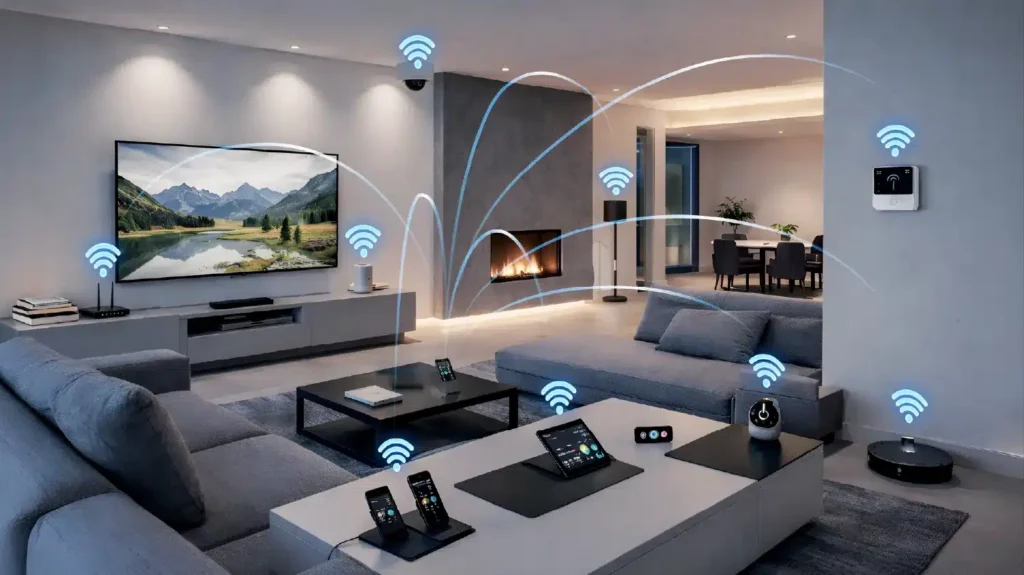
One of the major technologies behind this transformation is the Internet of Things (IoT). It connects physical devices to the internet, allowing them to collect information, communicate with other systems, and perform certain tasks automatically. From smart thermostats and intelligent lighting to connected door locks and home monitoring systems, IoT technology is creating new possibilities for residential living.
The internet of things in smart homes is becoming increasingly important as homeowners look for practical ways to improve comfort, manage energy consumption, and strengthen household security. Understanding how this technology works can help people make informed decisions about building more connected living environments.
What Is the Internet of Things in Smart Homes?
The Internet of Things refers to a network of physical devices equipped with sensors, software, and connectivity features that allow them to exchange information over the internet or other communication networks.
In smart homes, these connected devices work together to make household activities easier to manage. Homeowners can control compatible appliances through smartphone applications, voice assistants, automated schedules, or centralized smart home platforms.
Common examples of IoT-enabled home devices include:
- Smart lighting systems.
- Connected thermostats.
- Smart security cameras.
- Intelligent door locks.
- Voice-controlled assistants.
- Connected refrigerators and washing machines.
- Smart smoke and water leak detectors.
For example, a homeowner can use a mobile application to switch off the lights, adjust the thermostat, and check security cameras without being physically present at home.
These capabilities demonstrate how connected technology is changing traditional household management.
1. Making Home Automation More Convenient
Convenience is one of the biggest reasons people adopt smart home technology. Traditional household devices usually require manual operation, while IoT-enabled products can perform certain activities automatically.
Smart home systems allow users to create schedules and automated routines based on their preferences.
For example, homeowners can program their lighting to switch on at sunset, adjust room temperatures before arriving home, or automatically turn off selected appliances when leaving the property.
Voice assistants and mobile applications provide additional control options. Users can give simple commands or manage multiple connected devices through a single interface.
Home automation can be particularly useful for busy households because it reduces the time spent managing routine activities. As more devices become compatible with connected platforms, managing different household systems is becoming easier.
2. Improving Home Security and Monitoring
Home security is another important area where the Internet of Things is making a difference. Traditional security systems often depend on basic alarms and manual monitoring. Modern smart security solutions provide additional features that help homeowners monitor their properties remotely.
IoT-enabled security devices may include:
- Smart surveillance cameras.
- Motion detection sensors.
- Connected doorbells.
- Smart door locks.
- Window and door sensors.
- Smart alarm systems.
These devices can send notifications when unusual activity is detected. For instance, a smart doorbell may notify a homeowner when someone approaches the entrance, while a security camera can provide live video through a mobile application.
Smart locks also allow authorized users to control access without relying entirely on traditional keys.
Although connected security systems offer useful features, homeowners should protect them with strong passwords, secure networks, and regular software updates.
3. Supporting Better Energy Efficiency
Energy management is an important concern for modern households. Electricity consumption from lighting, heating, cooling, and appliances can increase household expenses.
Smart home technology helps homeowners monitor and manage energy usage more effectively.
Smart thermostats can adjust indoor temperatures according to schedules and occupancy patterns. Smart lighting systems can automatically switch off lights when rooms are not being used. Connected plugs can also help users monitor or control compatible appliances.
These features can reduce unnecessary energy consumption when configured properly.
For example, a smart thermostat may lower heating or cooling activity when residents leave the house and restore a comfortable temperature before they return.
The internet of things in smart homes can therefore support more responsible energy management while helping households understand their consumption patterns.
4. Creating More Comfortable Living Environments
Comfort plays an important role in residential living. IoT technology allows homeowners to customize different aspects of their indoor environments according to their preferences.
Smart thermostats, automated curtains, connected lighting, and voice-controlled entertainment systems can work together to create personalized household settings.
For example, a homeowner may create a morning routine that gradually increases bedroom lighting, adjusts the room temperature, and starts a preferred music playlist.
Similarly, smart lighting systems can change brightness and color temperature depending on the time of day or activity.
These features make household environments more adaptable and allow residents to manage their surroundings with less manual effort.
5. Helping People Manage Household Appliances
Modern household appliances are increasingly incorporating internet connectivity and intelligent features.
Smart refrigerators, washing machines, ovens, and robotic vacuum cleaners can provide information about their operating status and allow users to control selected functions remotely.
For example, a connected washing machine may send a notification when a laundry cycle finishes. A smart refrigerator may help homeowners monitor temperature settings or receive maintenance alerts.
Some connected appliances can also support scheduling and energy monitoring.
These capabilities make household management more organized and provide additional flexibility for people with busy daily routines.
However, homeowners should compare device features carefully because not every smart appliance offers the same level of connectivity or automation.
6. Improving Home Maintenance and Problem Detection
Unexpected household problems such as water leaks, electrical issues, and equipment failures can cause expensive damage if they remain unnoticed.
IoT sensors can help homeowners identify certain problems earlier by monitoring environmental conditions and equipment activity.
Examples include:
- Water leak sensors that detect unwanted moisture.
- Smoke detectors that send connected alerts.
- Temperature sensors that monitor unusual changes.
- Air quality monitors that measure indoor conditions.
- Smart equipment sensors that provide maintenance notifications.
For instance, a connected water leak detector placed near a washing machine or kitchen sink can notify residents when moisture is detected.
Early alerts may help homeowners respond more quickly and reduce the possibility of extensive damage.
These monitoring systems do not replace regular inspections, but they provide another useful layer of household protection.
7. Supporting Better Indoor Air Quality
Indoor air quality can influence comfort and the overall living environment. Dust, smoke, humidity, and other airborne particles may affect conditions inside residential buildings.
IoT-enabled air quality monitors can measure certain environmental factors and provide information through connected applications.
Some smart air purifiers and ventilation systems can respond to sensor readings by adjusting their operating settings.
For example, a smart air purifier may increase its activity when it detects higher particle levels in a room.
Humidity sensors can also help homeowners monitor indoor moisture levels and identify conditions that may contribute to mold growth.
By providing real-time environmental information, connected devices help residents make more informed decisions about maintaining comfortable indoor spaces.
8. Making Homes More Accessible
Smart home technology can also improve accessibility by offering alternative ways to control household devices.
Voice commands, automated lighting, remote door controls, and connected appliances can reduce the need for manual interaction with certain household systems.
These features may be particularly helpful for older adults and people with mobility limitations.
For example, someone may use voice commands to adjust lighting or control room temperature without needing to reach a physical switch.
Automated routines can also simplify daily activities by performing selected tasks at scheduled times.
When properly designed, connected home environments can provide greater independence and make everyday household activities more manageable.
9. Connecting Different Devices Through Smart Home Platforms
A smart home becomes more useful when compatible devices can communicate through a centralized platform.
Smart home ecosystems allow users to manage lighting, security, temperature, entertainment, and other household functions through connected applications or control systems.
Communication technologies such as Wi-Fi, Bluetooth, Zigbee, and Thread support connections between different types of devices.
Matter is another important smart home connectivity standard designed to improve compatibility between supported products from different manufacturers.
However, compatibility still depends on device specifications, software versions, and platform support.
Before purchasing connected products, homeowners should check whether their preferred devices can work together within their existing smart home ecosystem.
10. Understanding the Security and Privacy Challenges
Although IoT technology offers several advantages, connecting household devices to networks can introduce security and privacy concerns.
Smart devices may collect information about household activity, device usage, environmental conditions, and user preferences. If these systems are poorly secured, sensitive information may become vulnerable to unauthorized access.
Homeowners should take practical steps to protect their connected environments:
- Change default device passwords.
- Use unique and strong account passwords.
- Enable multi-factor authentication where available.
- Install software and firmware updates.
- Secure home Wi-Fi networks.
- Review device permissions and privacy settings.
- Disable unnecessary features and remote access.
It is also important to purchase connected products from reputable manufacturers that provide regular security updates and clear privacy policies.
Good security practices help homeowners enjoy the benefits of smart technology while reducing avoidable risks.
Challenges of Adopting Smart Home Technology
Despite its advantages, smart home technology comes with several challenges that homeowners should consider before investing in connected devices.
Initial Costs: Smart appliances, sensors, cameras, and home automation systems may require a higher initial investment than traditional alternatives.
Internet Dependency: Many connected devices rely on internet access or local network connections. Connectivity problems can affect remote controls and certain automated features.
Device Compatibility: Products from different manufacturers may not support the same communication standards or smart home platforms.
Privacy Concerns: Some devices collect personal and household information, making privacy settings and manufacturer policies important considerations.
Technical Complexity: Setting up multiple devices and maintaining their software may require time and basic technical knowledge.
Understanding these limitations can help homeowners choose appropriate products and build smart home systems that match their budgets and requirements.
The Future of the Internet of Things in Smart Homes
The future of smart homes will likely involve more advanced automation, improved device compatibility, and greater integration with artificial intelligence.
AI-powered systems may become better at understanding household routines and adjusting connected devices according to changing conditions.
For example, intelligent home platforms could use information from sensors and user preferences to manage lighting, heating, and energy consumption more efficiently.
Improved connectivity standards may also make it easier for products from different manufacturers to work together.
Another important development will be the continued improvement of security and privacy technologies. Manufacturers and technology providers will need to focus on protecting connected devices as smart home adoption increases.
As these developments continue, IoT technology is expected to play an increasingly important role in creating comfortable, efficient, and connected residential environments.
Conclusion
The Internet of Things is changing smart homes by connecting everyday household devices and making them easier to monitor, control, and automate. From improving home security and energy efficiency to supporting better comfort, accessibility, and maintenance, connected technology provides several practical benefits for modern households.
However, successful smart home adoption requires careful product selection, device compatibility checks, and strong security practices. Homeowners should understand the privacy implications of connected devices and choose solutions that meet their everyday requirements.